
Summary
Due to some NDA I can only talk in a very high level what was my involvement in the project.
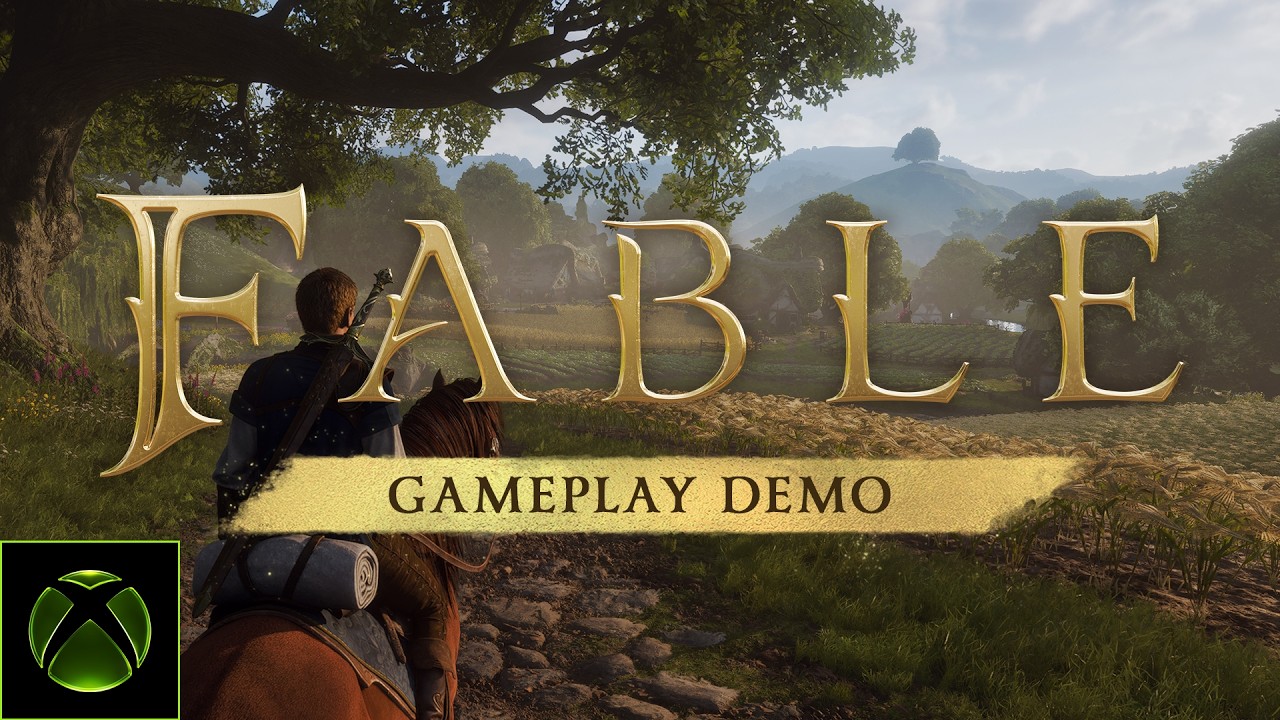
At Eidos-Montréal, I recently worked on Fable, an open-world third-person action-adventure game. I contributed to several quests simultaneously, including content with dense non-linear narrative components. I was also responsible for the full ownership of one quest, from initial design through implementation.
Core Level Design Process
My Level Design practice follows an iterative, player-centric process that combines strategic planning with rapid experimentation.
1. Establish Design Intent
A. Define gameplay, experiential, and narrative goals.
B. Identify key gameplay beats and emotional pacing targets.
C. Produce top-down layouts, side views, flow diagrams, and visual references.
D. Create concise documentation that aligns all disciplines around a shared vision.
2. Prototype Early and Iterate Often
A. Challenge ideas as early as possible through blockouts and in-engine testing.
B. Develop progressively refined greyboxes, whiteboxes, and colorboxes.
C. Use modeling tools to rapidly explore and iterate on spatial concepts.
Key validation criteria:
A. Readability and spatial clarity.
B. Player orientation and navigation.
C. Encounter pacing and progression.
D. Anticipated and emergent player behaviors.
E. Overall experience quality.
3. Explore and Exploit Systemic Possibilities
A. Analyze the possibility space created by mechanics and systems.
B. Map relationships between mechanics, enemies, objectives, and environmental features.
C. Build interaction matrices to identify compelling gameplay opportunities.
D. Transform systemic interactions into meaningful gameplay blocks and encounters.
4. Design for Learning and Mastery
A. Structure experiences around a teach → test → twist → mastery progression.
B. Introduce mechanics in controlled contexts before increasing complexity.
C. Encourage player creativity and emergent problem-solving.
D. Create dedicated gameplay "gyms" to push mechanics and systems to their limits.
5. Translate Systems into Player Experiences
A. Leverage a dual background in Game Design and Level Design to bridge disciplines.
B. Interpret gameplay and progression intentions and express them through spaces, objectives, encounters, and environmental storytelling.
C. Ensure systemic intentions remain tangible and meaningful throughout production.
6. Drive Cross-Disciplinary Collaboration
A. Use documentation and communication as production tools.
B. Collaborate closely with narrative, gameplay, art, animation, audio, VFX, and engineering teams.
C. Facilitate alignment, feedback loops, and collaborative decision-making
7. Continuously Expand Technical Proficiency
A. Deepen expertise in Blueprint scripting, gameplay implementation, systems design, and production workflows.
B. Maintain a strong curiosity for technical problem-solving and emerging development tools.
OpenWorld